Bubulcus ibis

Naveen Kumar
| 16-04-2026
 · Animal Team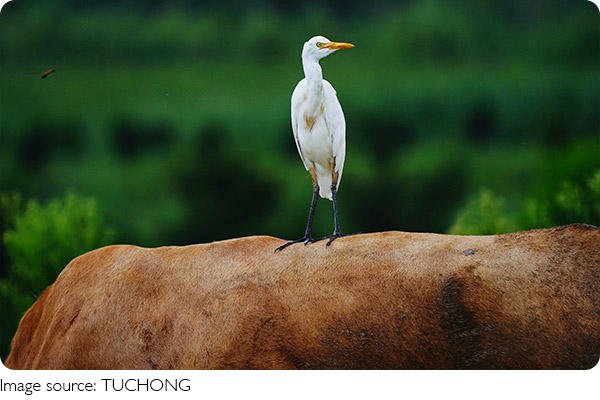
The Bubulcus ibis is not just another white heron. Found across the globe, this small, active bird has some unusual and captivating behaviors.
From its partnership with livestock to its surprising migratory patterns, the Bubulcus ibis proves that nature is full of fascinating surprises.
1. The Unexpected Grazing Companion
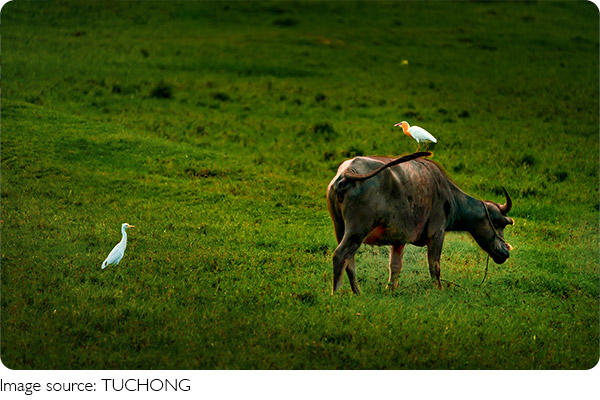
One of the most interesting facts about the Bubulcus ibis is its unique relationship with grazing mammals. Unlike other birds that prefer solitary living or hunt in isolation, the Bubulcus ibis has been observed following large herbivores like livestock, buffaloes, and even elephants.
• Why the partnership?
As these animals move through grasslands, they disturb insects and small creatures hidden in the vegetation. The Bubulcus ibis takes advantage of this by feeding on exposed prey. The larger animals may also benefit indirectly through reduced parasite pressure.
• A symbiotic relationship
This behavior is a classic example of ecological mutualism. While the Bubulcus ibis gains an easy food source, the grazing animals benefit from fewer pests, creating a balanced interaction.
2. A Master of Migration
Though commonly associated with tropical and subtropical regions, the Bubulcus ibis is a highly adaptable and mobile bird. It is known to travel long distances in response to seasonal changes and food availability.
• Seasonal journeys
Bubulcus ibis populations shift between breeding areas and warmer regions depending on climate conditions and food supply. Their movement often aligns with the distribution of grazing herds.
• Incredible adaptability
This flexibility has allowed the Bubulcus ibis to establish itself in diverse ecosystems, from wetlands and grasslands to agricultural fields and even urban margins.
3. Surprising Appearance Changes
While mature Bubulcus ibis are typically known for their clean white plumage, their appearance changes noticeably during breeding periods.
• Breeding plumage
During the breeding season, Bubulcus ibis develop buff or golden ornamental feathers on the head, chest, and back. These temporary features are used for courtship display and social signaling.
• Fun fact
These breeding colors fade after the season ends, returning the bird to its plain white appearance.
4. A Flexible Diet
The Bubulcus ibis is an opportunistic feeder with a highly adaptable diet. While it often feeds alongside grazing animals, it is not limited to a single food source.
• What's on the menu?
Its diet includes insects, small amphibians, reptiles, and occasionally small aquatic creatures. It can forage in fields, wetlands, and even roadside areas.
• Opportunistic feeding style
This flexibility allows Bubulcus ibis to survive in changing environments and expanding human-altered landscapes.
5. Social Birds with Coordinated Behavior
Bubulcus ibis are highly social and often gather in groups, especially when feeding or nesting.
• Communication and coordination
They use a range of calls to communicate during breeding and group foraging. These signals help maintain flock cohesion and improve feeding efficiency.
• Mixed-species associations
They are often seen alongside other wading birds, forming temporary feeding groups that enhance food detection.
6. A Natural Pest Controller
Beyond their ecological interactions with grazing animals, Bubulcus ibis also play an important role in controlling insect populations.
• Helping ecosystems
By consuming large numbers of insects and small pests, they contribute to maintaining ecological balance in grasslands and farmlands.
• Agricultural benefit
Farmers often benefit indirectly from their presence, as they help reduce pest pressure in grazing and cropping areas.
7. Global Expansion and Adaptability
The Bubulcus ibis is now one of the most widely distributed herons in the world.
• Worldwide presence
Originally associated with parts of Africa and Eurasia, it has expanded across multiple continents due to its adaptability and changing landscapes.
• Urban and rural survival
It thrives in both natural ecosystems and human-modified environments, making it one of the most successful wading birds globally.
The Bubulcus ibis may appear simple at first glance, but its ecological relationships, adaptability, and global spread make it an extraordinary species. It is a reminder that even the most unassuming creatures can play complex and valuable roles in the natural world.